What are soft skills?
Soft skills are intangible qualities that determine how we interact with others. They are often overlooked but are essential to success in any field. While providing a universal definition of soft skills is difficult, you can think of them as skills unrelated to a specific job. They are general characteristics that help employees thrive, regardless of seniority level, role, or industry. They are often called transferable skills or interpersonal skills.
Essential soft skills
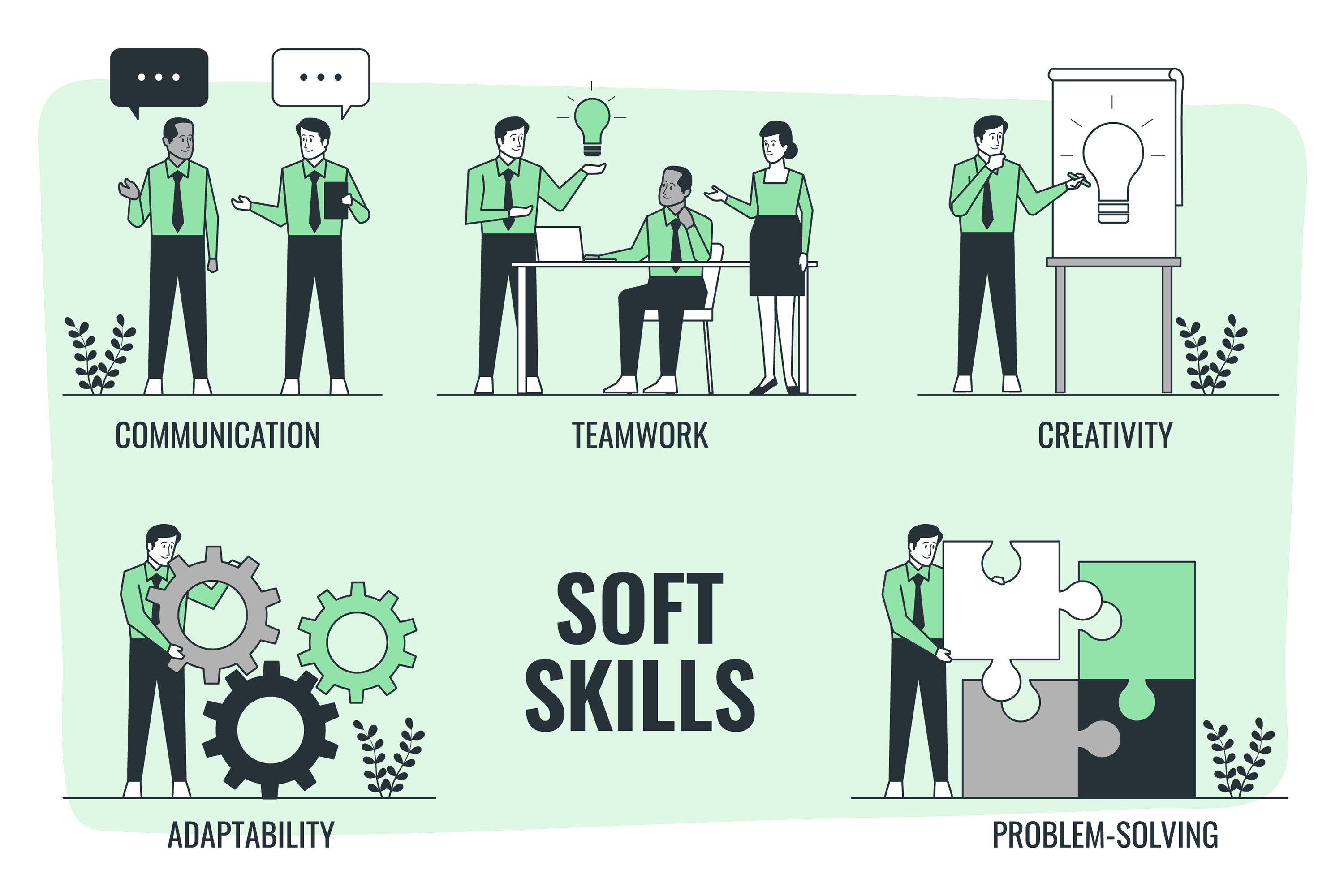
- Ability to communicate effectively
- Teamwork Spirit
- Problem-Solving ability
- Motivation
- Individual management
- Time management
- Adaptability and flexibility
What are other essential soft skills?
- Trust building
- Conflict resolution
- Leadership
- Research
- Critical Thinking
- Creativity
- Criticism of
- Work ethics
- honesty
How do soft skills work?
In today's competitive world, having technical skills or hard skills alone is not enough for career success. Employers are also looking for people who have a strong set of soft skills. These skills not only help people build better relationships with others but also help them grow personally and professionally. For example, suppose a person has good hard or technical skills but does not perform well in communicating with others and doing teamwork. In that case, he may be unable to be successful in his work environment.
How to acquire soft skills?
Unlike hard skills, which are learnable, soft skills are internal and difficult to learn and are more difficult to assess and measure.
Participation in job training programs
Some job training programs also cover soft skills. They may talk about soft skills so job seekers know what they are and why highlighting them on a resume is important. There are also free online courses that can help you improve your soft skills.
On-the-job training
You've probably improved your soft skills if you've worked for a while. For example, if you have worked in a sewing workshop, you have been in a team environment. If you've helped unhappy customers find solutions, you've used problem-solving and conflict-resolution skills.
Note: It is necessary to know that employers do not directly ask you whether you have soft skills.
Instead, they create situations for you and ask you what you would do in such a situation.
Conclusion
• Soft skills are non-technical skills, unlike hard skills.
• You can strengthen your soft skills through school, the workplace, and participating in volunteer work and job training programs.
• Be sure to mention soft skills in your resume.
• Showcase your soft skills when you go to a job interview.